
Weather 101 / Winter
Snow Ratios: Why 1 Inch of Rain Isn't Always 10 Inches of Snow
You may have heard that 1 inch of rain equals 10 inches of snow. That's a handy rule of thumb, and it's often wrong. How much snow you get from a given amount of water depends on what kind of snow it is, and that's one of the biggest reasons snowfall forecasts miss.

What a snow ratio is
Melt a pile of snow and measure the water. The snow ratio (forecasters call it the snow-to-liquid ratio) is how many inches of snow it took to make one inch of water. A 10-to-1 ratio means 10 inches of snow melts down to 1 inch of water.
The 10-to-1 figure is an old average. Real storms range widely around it.
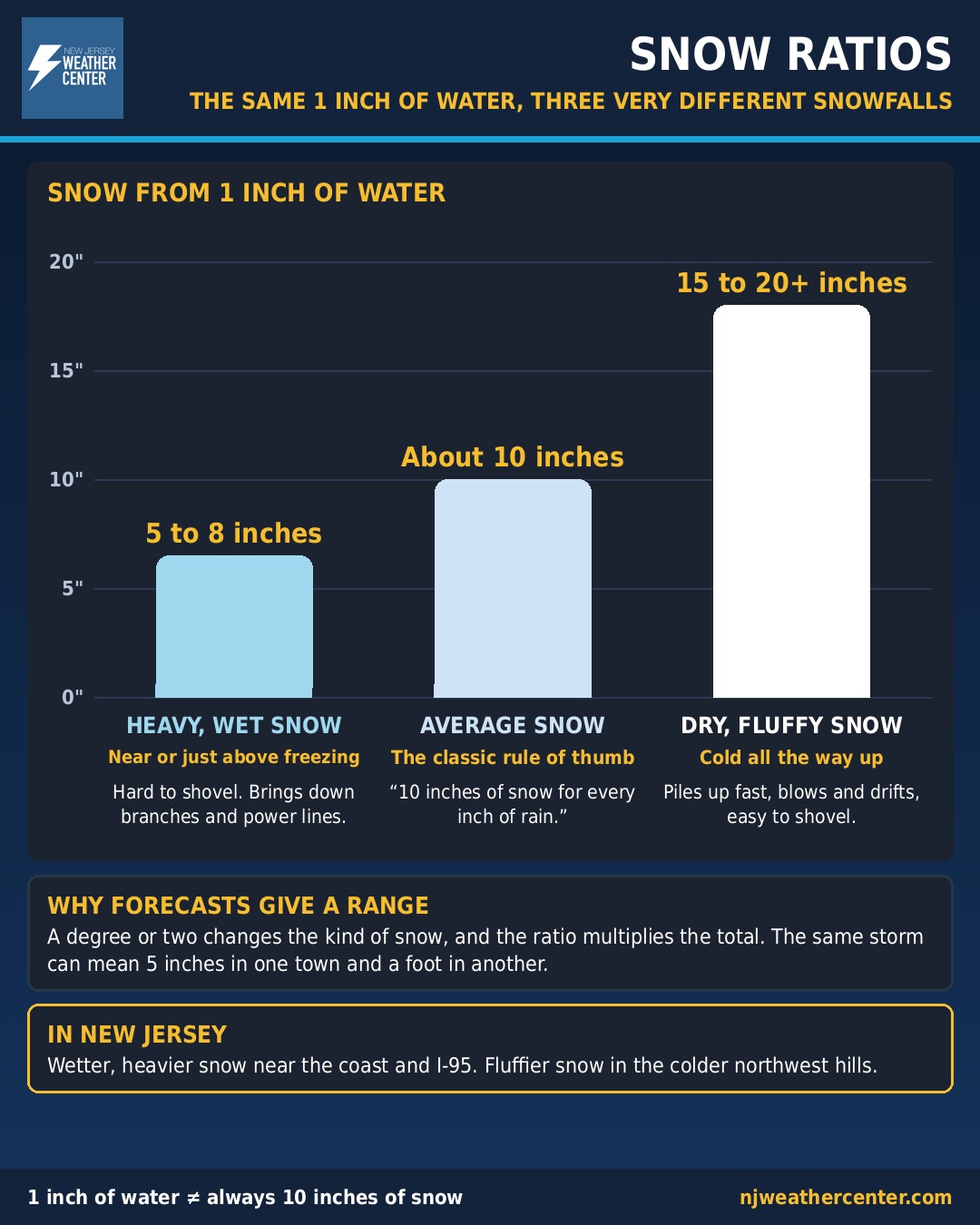
Wet snow vs. powder
- Heavy, wet snow (about 5 to 8 inches per inch of water): falls when temperatures are near or just above freezing. It's great for snowmen and terrible for shoveling, and its weight brings down branches and power lines.
- Average snow (around 10 to 1).
- Dry, fluffy snow (15 to 20 inches or more per inch of water): falls when it's cold through the whole depth of the atmosphere. It piles up fast, blows around and is easy to shovel.
So the same storm, with the same one inch of water, could leave 5 inches in one town and 20 in another.
What changes the ratio
- Temperature is the big one, both at the ground and up in the clouds where the flakes form. Colder usually means fluffier.
- Wind breaks flakes into smaller pieces that pack together, which lowers the ratio.
- Melting and settling. Snow that falls on warm ground or mixes with sleet and rain adds up to much less.
Why it matters in New Jersey
Our storms often ride the line between rain and snow, with temperatures right around freezing. That means a lot of our snow is the heavy, wet kind near the coast and along I-95, while the hills of northwest New Jersey, a few degrees colder, get fluffier snow from the same storm. Add that to the rain-snow line, and it's easy to see how one storm can leave 3 inches of slush in one county and a foot of powder two counties away.
It's also why forecasts give a range, like 4 to 8 inches. A small error in the forecast temperature changes the ratio, and the ratio multiplies everything. More on that in why snowstorm forecasts change.
- NOAA Weather Prediction Center: snow-to-liquid ratios
- UCAR: Accumulated wisdom, how to measure snow
- NOAA Institutional Repository: snow-to-liquid ratio study
For dangerous weather, always follow official National Weather Service warnings and your local emergency officials.