
Weather 101 / History
Hurricane Sandy by the Numbers: What Happened in New Jersey
On the evening of October 29, 2012, Sandy came ashore near Brigantine, just north of Atlantic City. New Jersey had never seen damage like it. The National Hurricane Center's official report calls the extent of catastrophic damage along the New Jersey coast "unprecedented in the state's history." These are the numbers from that report.
The storm
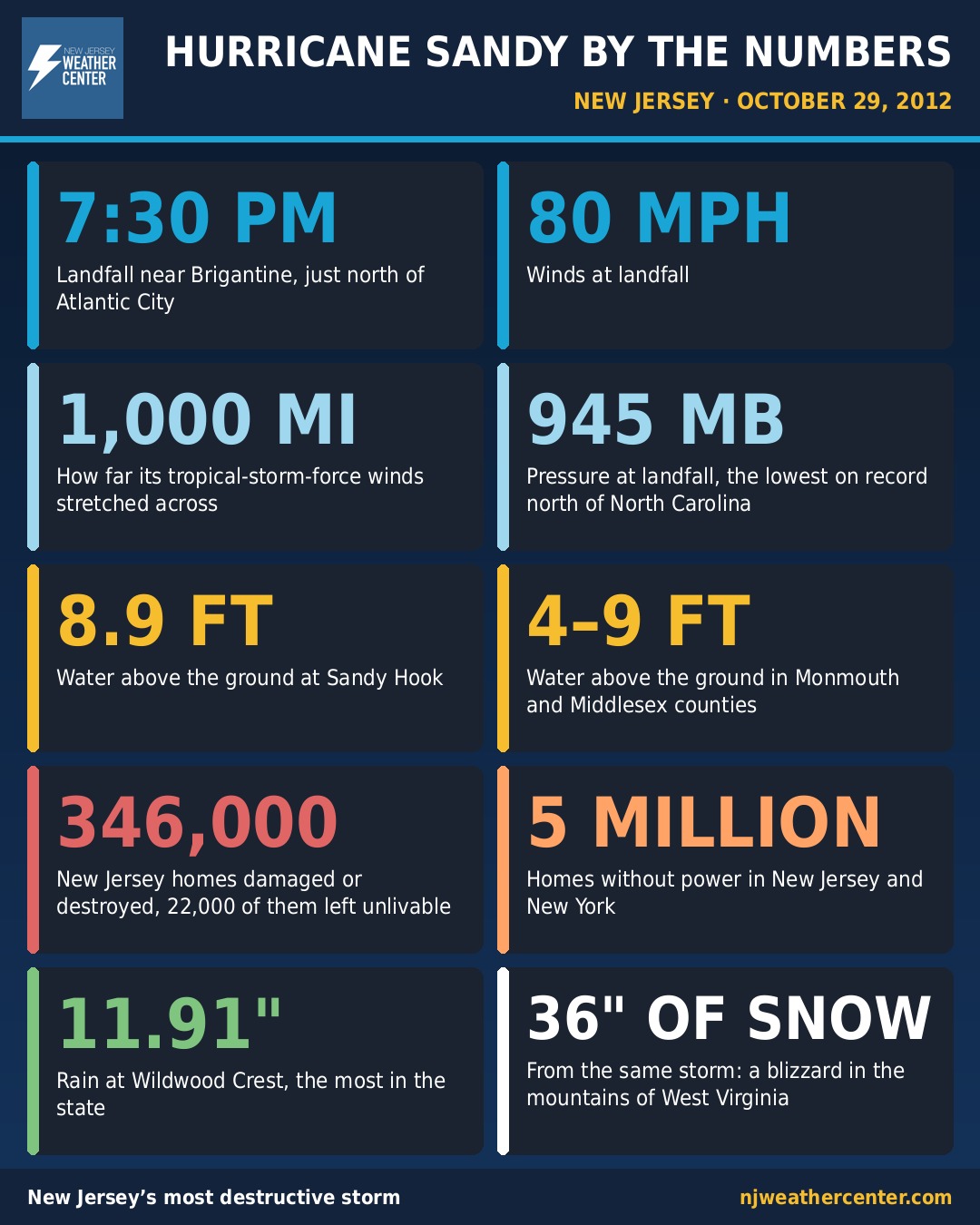
- Landfall: about 7:30 PM on October 29, 2012, near Brigantine.
- Winds at landfall: about 80 mph. Technically Sandy was a "post-tropical cyclone" by then, not a hurricane, but it was just as strong.
- Pressure: 945 millibars at landfall. A gauge at Atlantic City read 945.5 mb, noted as the lowest sea-level pressure ever recorded in the United States north of North Carolina.
- Size: tropical-storm-force winds stretched about 1,000 miles across before landfall. Sandy was the largest Atlantic tropical cyclone in records going back to 1988.
- Gusts: about 86 to 90 mph in northern New Jersey, with hurricane-force gusts reported in seven states.
Why it turned left
Most storms moving up the East Coast curve out to sea. Sandy couldn't: an unusual blocking pattern over the North Atlantic stood in the way, and the storm bent northwest, straight into New Jersey. That angle is what made it so destructive. Its enormous wind field pushed the ocean directly at the coast for hours.
The water
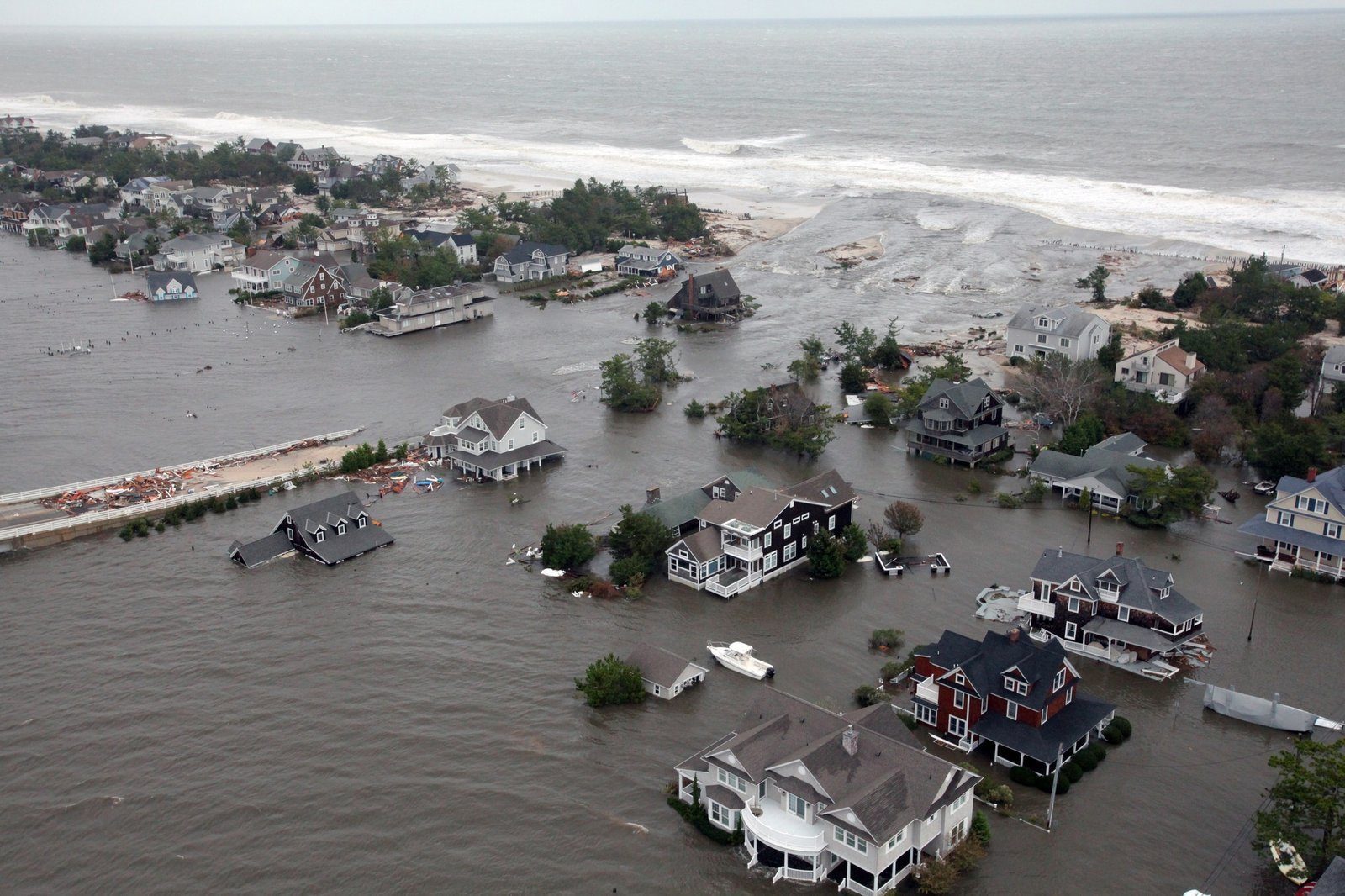
Sandy's worst damage came from the ocean, not the wind or rain.
- Sandy Hook: a storm surge of at least 8.57 feet above normal tide levels. The gauge failed during the storm, so the real number was likely higher. Nearby, water reached 8.9 feet above the ground.
- Monmouth and Middlesex counties: 4 to 9 feet of water above ground level along the coast.
- Union and Hudson counties: 3 to 7 feet. Ocean County: 3 to 5 feet.
- Atlantic City and Cape May: surges of 5.82 and 5.16 feet.
- Keyport: 7.9 feet above ground. Sayreville: 7.7 feet.
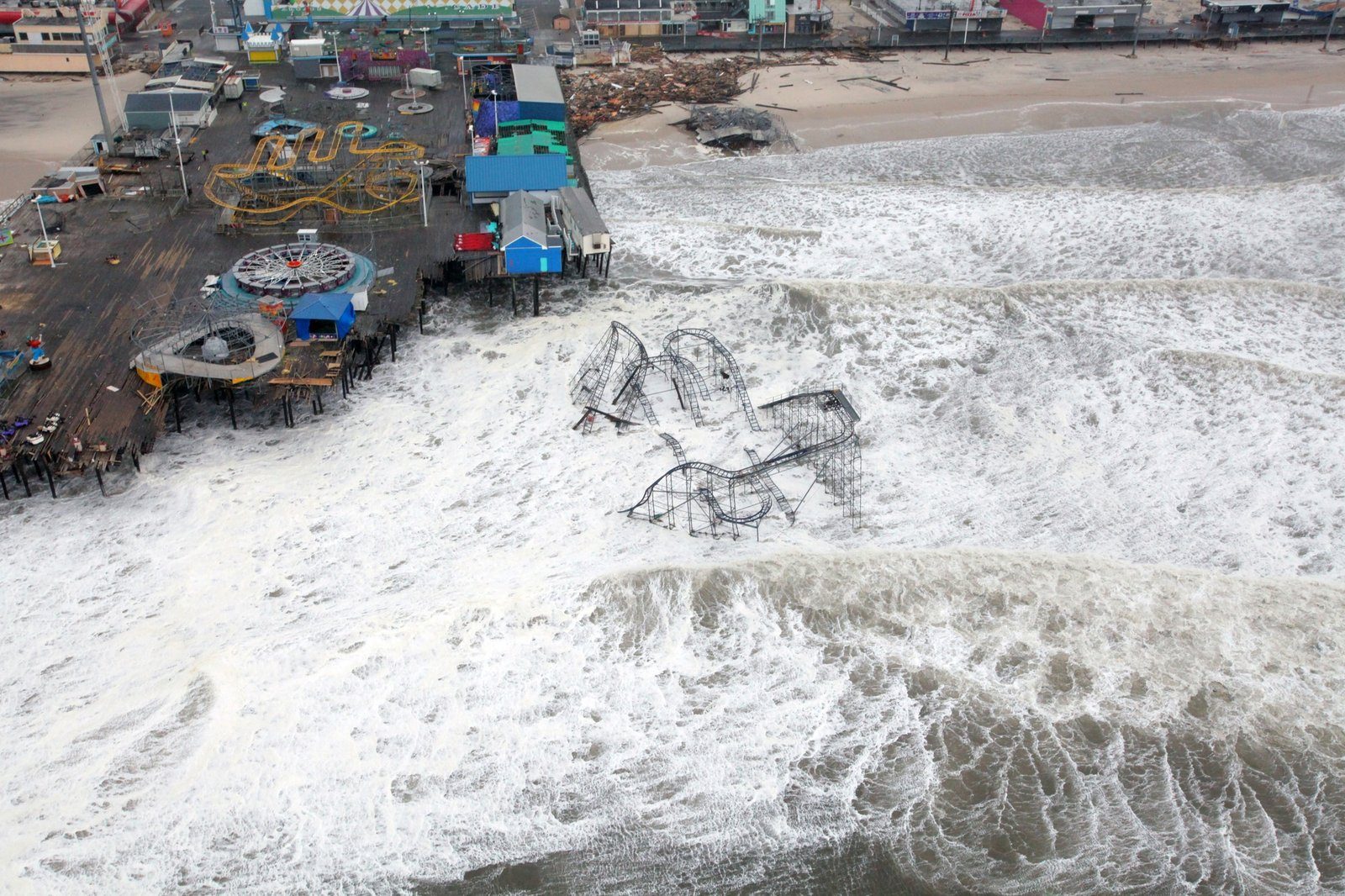
In Mantoloking, the surge cut two new inlets through the barrier island. In Seaside Heights, Casino Pier and Funtown Pier were destroyed.
The rain
The heaviest rain fell at the southern tip of the state: 11.91 inches at Wildwood Crest and more than 10 inches at North Wildwood. Most of North Jersey got far less rain. There, the damage was wind and water from the ocean and bays.
The snow
The same storm was a blizzard a few hundred miles inland. As Sandy pulled cold air in behind it, heavy snow fell in the Appalachian Mountains from western North Carolina to southwestern Pennsylvania. West Virginia was hit hardest, with a large area of more than a foot of snow and a peak of 36 inches near Richwood. The National Hurricane Center called widespread heavy snow like that "exceptionally rare" for a storm that had just been a hurricane.
The toll
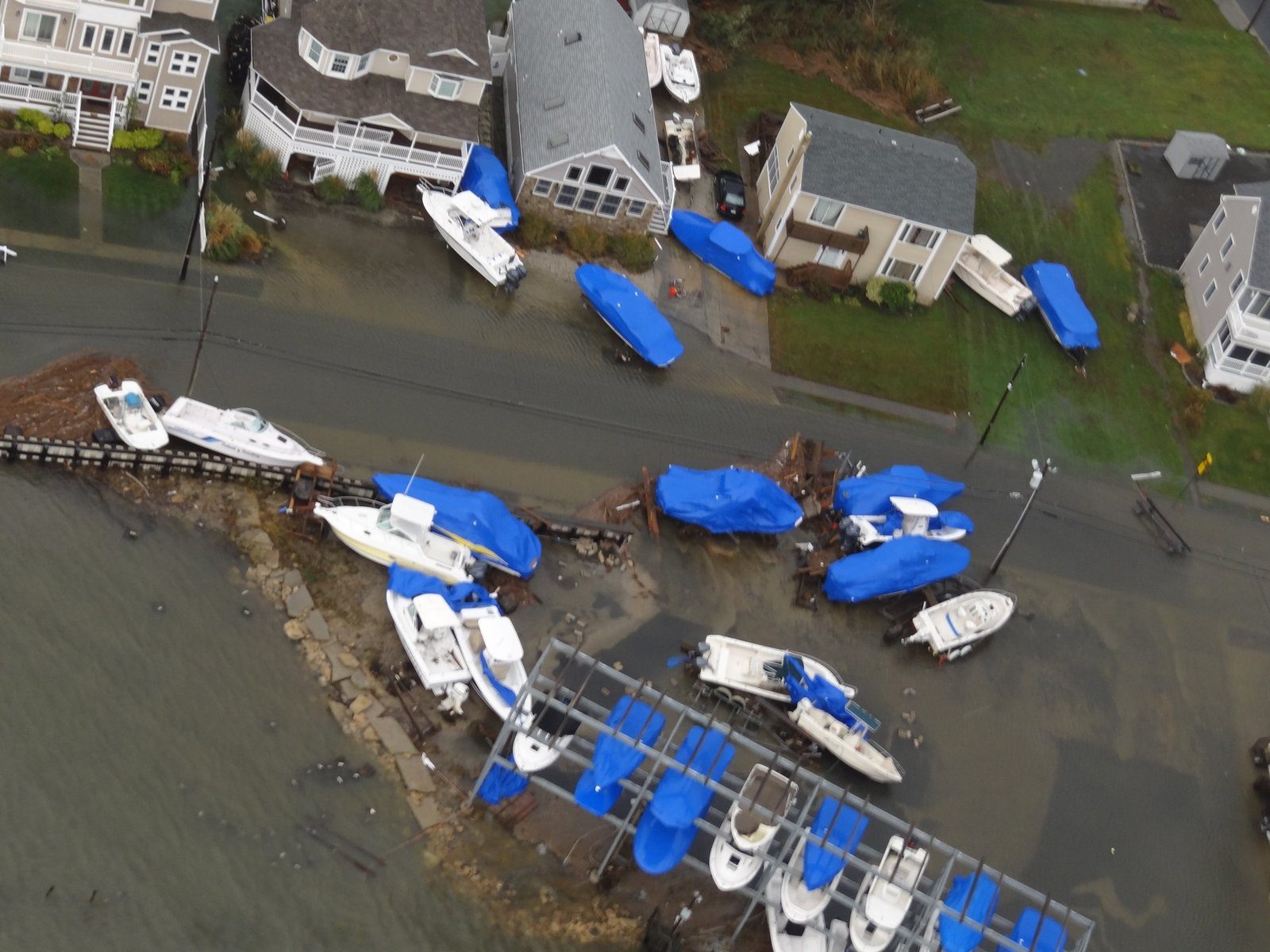
- 346,000 housing units damaged or destroyed in New Jersey, 22,000 of them left uninhabitable (New Jersey Governor's office estimate).
- Nearly 19,000 New Jersey businesses with damage of $250,000 or more.
- 12 deaths in New Jersey directly from the storm, out of 72 in the United States. Many more people died afterward, in the cold and dark of long power outages and during cleanup.
- About 5 million homes lost power across New Jersey and New York, in many places for weeks.
- 48,000 trees removed or trimmed by PSE&G to restore power.
- About $50 billion in damage across the United States in the early estimates, second only to Hurricane Katrina at the time.
What Sandy changed
Sandy showed that a storm doesn't need to be a major hurricane, or even officially a hurricane, to be a disaster. Size, angle and timing with the tide mattered more than the category. It's one reason the National Hurricane Center later added Storm Surge Watches and Warnings, separate from the wind warnings.
New Jersey Weather Center started in 2012, after Sandy. When a tropical system threatens our area, we post the official forecast cone and storm surge maps and tie them to what the storm means locally.
- National Hurricane Center: Tropical Cyclone Report, Hurricane Sandy (AL182012)
- National Weather Service: Service Assessment, Hurricane/Post-Tropical Cyclone Sandy
For dangerous weather, always follow official National Weather Service warnings and your local emergency officials.